
MARCIEGAMBETTA
Marcie Gambetta
English 231
Epic of Gilgamesh
Tablets 1-4
Reading Journal 12
10/13/14
FIRST THOUGHTS
My first thoughts about reading the Epic of Gilgamesh are that I'm excited. I enjoyed the video and I can see a lot of relationships in this story. I also, think it is very interesting that this is the oldest written text that we have. It's amazing that clay tablets could have survived for 4600 years, not just survive but also still be legible.
QUOTES
From Tablet 1 - "Might net, protector of his people. Raging flood wave who destroys even walls of stone."
This quote is referring to Gilgamesh and explaining his characteristics. The quote showed me the duality of Gilgamesh, he was a protector and an avenger. It also reminds me of the essence of Jesus. Jesus was the lamb, because he was slain to protect his people from an eternity of suffering. (Revelation 5:5-6) Jesus was a lion, because he is the triumphant king avenging his people. Jesus was a fisherman, and he had a righteous anger when the money changers were in the temple driving them out with a whip. (Matthew 21:12, John 2:15)
From Tablet 1 - "Enkidu was diminished, his running was not as before. But then he drew himself up, for his understanding had increased."
This quote is discussing how, after he was tempted by Shamhat, he is both less and more than he was before. Another demonstration of duality, this time with Enkidue who is Gilgamesh's double. He is more than he was before because he has gained wisdom. He is less than before because he is now separated from the natural world and his relationship with the animals has suffered. This is very similar to Adam after he has eaten the forbidden fruit. The fruit gave him knowledge but left him separated from God. (Genesis 3:5)
From Tablet 2 - "Gilgamesh replied 'Where is the man who can clamber to heaven? Only the Gods live forever with glorious Shamash, but as for us men, our days are numbered, our occupations are a breath of wind'".
This quote displays the theme "Death is a part of life" and "Time is eternal, life is fleeting". When reading this quote I was reminded of one of my favorite books of the bible, Ecclesiastes. The part discussing how our occupations are a breath of wind reminds me of Ecclesiastes because in Ecclesiastes it talks about how there is nothing new under the sun, generations come and go, and how all of our activites are fleeting - a chasing after the wind. (Ecclesiastes 3:19-20, 1:4, 1:14) Also, the section of the quote discussing how our days are numbered can also be seen mirrored in the bible. James tells us how we are vapors that appear for a little while and then vanish away. (James 4:14) Job shows are transience by saying how we are like the flowers and shadows that do not endure and that our days are numbered. (Job 14:1-6)
QUESTIONS
Who is Enil and what is the Triad?
Enil is considered the father god, a great counselor, and part of the Triad. The Triad included Enil, An (Anu), And Enki (Ea). An is god in the omniprestent, omnipotent, and omnicious state. Enki is the god of earth. They were considered god, three parts were also considered equal. This is concept is seen in Christianity and the belief in the Trinity. God the Father, God the Son, and God the Holy Spirit. All 100% God but different manifestations of God.
How are the people mocking Gilgamesh in the first tablet?
The people are mocking Gilgamesh, by asking "Is he the shepherd of Uruk Haven, is he their shepherd...bold, eminent, knowing, and wise". Gilgamesh's father was known as "The Shepherd", they are pointing out how unlike his father, Gilgamesh is. They are asking Gilgamesh to be like his father and rule them like he should. This was the plea of the people to An.
VOCABULARY
Zikru:
Definition: Image, counterpart, replica
Sentence: A Zikru could be considered a doppleganger.
Sumukan:
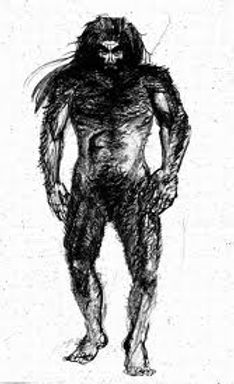
Definition: A god of the animals who wore garments made out of hair or were hairy.
Sentence: Enkidu was hairy like a Sumukan.
SUMMARY/RESPONSE
I was eager to read today. While reading I found so many connections to the Bible but also, things that could be extraterrestrial. In an effort not to write a book, I am going to stick with the Biblical connotations. The very beginning of the story starts out like a psalm. Then, the story discusses the tablets that have the story of Gilgamesh on them. The tablets were made of stone, placed in a copper box, which was in a temple. The Ten Commandments were made of stone, placed in a golden box, which was in a temple. (Deuteronomy 10:14, Hebrews 9:4, 1 Kings 8:9, 1 Kings 6:19). Gilgamesh was born a king who surpassed all other kings and he was also part divine. Jesus was born to be the King of Kings and was a divine being born of a mortal woman. (Matthew 2:1-2, 1 Timothy 6:15, Matthew 1:23). The people wanted Gilgamesh to be a shepherd to his people, Jesus is known as the Good Shepherd. (John 10:11).
Enkidu is the mirror of Gilgamesh and they both show a dual nature. Shamhat tames Enkidu and in doing this she is a parallel of Eve. Eve gave Adam the forbidden fruit, Shamhat gave Enkidu herself. Shamhat tells Enkidu he will be "Just like a god", the serpent tells Eve, "For God knows that when you eat from it your eyes will be opened, and you will be like God, knowing good and evil." (Genesis 3:5) Eve separated Adam from the natural order with God and Shamhat separated Enkidu from the nature. Both gave the men wisdom and knowledge. Creation is said to have taken six days and on the seventh, God rested. When Shamhat and Enkidu were together it was for six days and seven nights, Enkidu rested on the seventh day. Enkidu was naked but Shamhat shared her clothing and clothed him. In the Bible, once Adam and Eve's eyes were opened they realized they were naked and clothed themselves. (Genesis 3:7).
Enkidu mirrors two people, Adam and John the Baptist. Like Adam, Enkidu was tempted and by giving in, he was both elevated and separated. Enkidu was wild, grazed among animals, was hairy, and looked like a Sumukan. John the Baptist wore a garment of camel's hair and lived in the wild. (Matthew 3:4). John the Baptist is a mirror and predecessor of Jesus and Enkidu is a mirror of Gilgamesh.
Urek is thought to have existed in the same location as the Garden of Eden. Gilgamesh is mirroring David and Bathsheba when he demands first rights to the bride. (2 Samuel 11:4). Gilgamesh however, does not hide the fact that he thinks he should have her before her husband does. David hides his affair with Bathsheba and even puts her husband on the front lines of a battle so that he will be killed and out of the way.
Both Enkidu and Gilgamesh are referred to as "mighty as the meteorite of Anu" indicating perhaps a meteorological event that occurred and was explained supernaturally. There is evidence of meteorite strikes in the area around 3000 bc and again in 2350 bc. When Enkidu and Gilgamesh fight it reminds me of when Jacob wrestled with God. This shows how Gilgamesh fought with his mortality and also with his morals. After the fight he has come to terms with himself and becomes a much better king. Jacob fought with humans and God and overcame, he was blessed and his name became Israel. (Genesis 32:22-31)
The theme that stood out the most to me was "Human Beings All Have the Same Needs". Gilgamesh and Enkidu both have carnal desires that they pursue. They also have a need for companionship. It is fortunate for them that Enkidu was made for Gilgamesh because it makes him a perfect companion. They also both have the desire for adventure and this is why they set out to slay Humbaba.
I used Reader-Response to help analyze this text. As I read I wrote a summary, notes, and questions to be answered. This helped me to organize my thoughts and allowed my writing to come much smoothly and quickly. The connections were firing away and it was nice to be able to refer back to my notes to help with the reading journal. This text is ancient but also mirrors texts that are used today. I thought it would be important to view it through this lens.
WORKS CITED
George, A. R. The Babylonian Gilgamesh Epic: Introduction, Critical Edition and Cuneiform Texts. Oxford: Oxford UP, 2003.
Print.
The Bible. New International Version
Dictionary. Dictionary.com LLC 2014. Retrieved 9/27/14, from http://dictionary.reference.com/
Bloom, Harold, and Blake Hobby. The Hero's Journey. New York: Bloom's Literary Criticism, 2009. Print.
Photo Credit:
http://upload.wikimedia.org/wikipedia/commons/f/f8/I-Ching-chinese-book.jpg
Reading Journal

